So, if you think you can walk and type at the same time, this is the work station for you!!
Showing posts with label advertising. Show all posts
Showing posts with label advertising. Show all posts
February 5, 2014
Stand Up For Better Health
We just finished a window sign for a company that makes treadmill work stations. Work While Walking in Bellevue, WA, wanted to grab the attention of people passing by, so we designed an animated sign using their logo.
So, if you think you can walk and type at the same time, this is the work station for you!!
So, if you think you can walk and type at the same time, this is the work station for you!!


December 20, 2013
James Beard Award-winning chef Jason Wilson
Located in the historic Hotel Max, Miller’s Guild is built around a nine-foot-long, custom-made wood-fired grill. The menu features 75-day dry-aged beef, nose-to-tail butchery, and rustic baked goods. Carrying on the theme, Miller’s Guild also features crafted cocktails made with spirits house-finished in oak casks, suspended above the bar.
Miller’s Guild is a partnership forged between James Beard Award-winning chef Jason Wilson, his wife and Crush co-owner Nicole Wilson, ChefStable Group founder and owner Kurt Huffman, and former Best Young Sommelier in America Jake Kosseff.


Wilson is absolutely geeking out about the custom-made 9-foot-long Infierno wood-fired grill that will be the centerpiece of both the room and his menu.


June 4, 2012
Cupcake Royale to open Downtown on Pine Street
Western Neon is excited to be working with our favorite cupcake chain on their new signage.
The local cupcake chain will open its sixth outpost at 108 Pine, formerly home of the Chocolate Box and Molly Moon’s. Owner Jody Hall plans to introduce a new line of ice creams, and a sign on the door claims we’re in for “the most amazing transformation in the history of chocolate." The Chocolate Box is moving into the space next door.


October 29, 2011
One of my favorite entrepreneurs
Cutie pies
Mini-mason jars are a hallmark at Dani Cone's High 5 Pie and Fuel Coffee cafes in Seattle, where her "pie jars" showcase peach-ricotta and mango-raspberry fillings, for example, as well as savory versions filled with potatoes and curried vegetables. Her new cookbook, "Cute Pies: 40 Sweet, Savory, and Adorable Recipes" (Andrews McMeel, 160 pages, $16.99), which details the specifics for pie jars, pie-pops and hand pies, landed in bookstores last week.
She also understands the value of beautiful, iconic signage. Great job, Dani!!


July 30, 2010
No more Chinoise!!

Now the restaurant is known as Jae's Asian Bistro and Sushi. A modern mix noodle bar and pan-Asian bistro in Madison Park ... Jae, the chef knows his stuff AND the regulars names!
July 24, 2010
Retrofit Home's Fab New Location & Yummy Neon Sign
 |
| http://retrofithome.homestead.com |
They really take a design approach, the store constantly changes and evolves, and as always, they leave the attitude to others~~ this is a neighborhood store.
April 12, 2010
Subliminal Signage
Signs are so widespread we hardly notice them. We don't realize their subliminal effect on us, which is one reason why they're so powerful.
An effective on-premise sign is the number one form of advertising for many retail establishments, and during tough economic times, when marketing dollars are scarce, the sign plays an even more critical role in promoting a company’s product or services.
Remember, 85% of your customers live or work within a five-mile radius of your business. When driving to and from work, school and shopping, they pass your location 50 to 60 times a month. Your sign should be designed so that it commands their attention every time they pass.
No matter how good your product or service is, if your sign does not make people stop and shop, you will not be able to compete. In our highly competitive and media-rich world, an investment in professional sign design is money well spent.


April 1, 2010
Important facts to remember . . .
• Studies have proven a neon sign is visible and legible from a greater distance than any other type of
on-site sign in both daylight and evening hours.
• Dollar for dollar, neon is virtually the most cost effective on-site advertising available.
• There is always a need for attracting more visual attention to your business, especially during slower economic periods.
on-site sign in both daylight and evening hours.
• Dollar for dollar, neon is virtually the most cost effective on-site advertising available.
• There is always a need for attracting more visual attention to your business, especially during slower economic periods.
March 25, 2010
A junkyard of vintage glitz and glamour awaits you in Las Vegas
Established in 1996 to preserve Las Vegas’ under appreciated neon heritage, the Neon Boneyard houses many of the city's historic casino signs on a three-acre site at the edge of the city. The core of the collection of unrestored signage came from the pioneering Young Electric Sign Company, one of the first to produce neon signs in the area; but, in recent years, it has grown through donations from businesses and individuals who appreciate the key role played by neon in the growth of Las Vegas.


March 17, 2010
The Value of Signage
Observations of the travel habits in the US indicate that an average of 85% of your potential consumers are likely to pass by your establishment at least 10 times a month.
An onsite sign viewed by 85% of the retail market at an average of 10 times a month cost only $0.02 per thousand exposures.
A three hundred line newspaper ad, also run 10 times a month could command only 53% of the market at a cost of $2.81 per thousand exposures.
TV on the other hand cost $9.82 per thousand exposures but could command only 14% of the retailers market with a readership of 11%.
In short, an exterior sign is the most effective, inexpensive money you can spend on advertising!
An onsite sign viewed by 85% of the retail market at an average of 10 times a month cost only $0.02 per thousand exposures.
A three hundred line newspaper ad, also run 10 times a month could command only 53% of the market at a cost of $2.81 per thousand exposures.
TV on the other hand cost $9.82 per thousand exposures but could command only 14% of the retailers market with a readership of 11%.
In short, an exterior sign is the most effective, inexpensive money you can spend on advertising!
February 5, 2010
What size letters should I get on my Neon Sign?
As a general rule of thumb, your letters will be legible up to 38 feet away for each inch of letter height. The following chart shows some standard letter heights and their maximum legible distances.
Note: Red Neon letters are most readable, followed by Pink, Green, Turquoise. (Blues, Purples and Yellows are least readable and are usually recommended for borders.)
Black or Smoked backings will also increase the visibility of your sign.
Lower/upper case letter combinations on neon signs are more readable than all upper case letters and increase your Maximum Readable Distance.
Letter Height / Max. Readable Distance
4" 152 feet
5" 190 feet
6" 228 feet
8" 304 feet
10" 380 feet
12" 456 feet
Note: Red Neon letters are most readable, followed by Pink, Green, Turquoise. (Blues, Purples and Yellows are least readable and are usually recommended for borders.)
Black or Smoked backings will also increase the visibility of your sign.
Lower/upper case letter combinations on neon signs are more readable than all upper case letters and increase your Maximum Readable Distance.
February 1, 2010
Seattle Neon Signs
Seattle is the perfect place for neon. Neon lights up the gloom and reflects on the rainy pavement in the most beautiful way. The link below shows some of iconic signs that brighten our gray days and light our way after dark.
Seattle's neon signs pierce the winter darkness
In the gloomy winter months it's helpful to remember Seattle is home to thousands of neon signs, from mass-produced "OPEN" signs to one-of-a-kind historic landmarks whose shape and aura define neighborhoods.January 28, 2010
First neon sign in America
- In 1910 Frenchman Georges Claude patented the neon light and as a result we've had the pleasure to see those glowing advertisements since.
- The world's first neon sign went up in 1912 in a Paris barbershop.
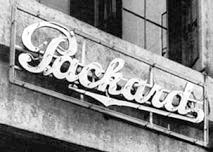
- In 1923, Georges Claude and his French company Claude Neon, introduced neon gas signs to the United States, by selling two to a Packard car dealership in Los Angeles. Earle C. Anthony purchased the two signs reading "Packard" for $24,000.
Neon lighting quickly became a popular fixture in outdoor advertising. Visible even in daylight, people would stop and stare at the first neon signs dubbed "liquid fire."
January 25, 2010
How does neon work?
Neon, a rare colorless, odorless gas, is found not only in our atmosphere, but also in gases trapped in the earth.
Since neon is a first-rate conductor of electricity and since it has an amazing ability to give off light which can be seen at great distances, it is used most frequently in airplane beacons, in lamps, and in advertising signs.
Neon lamps are made by removing all the air from glass tubes and filling them with neon. An electrical current is sent from an electrode at one end of the tube, through the neon, to a second electrode. This electrical current causes the gas to glow a fiery red. Neon lamps do not have filaments as are found in incandescent lamps, in neon lamps it is the gas itself that glows.
Neon is produced when air is turned to a liquid under high pressure and at temperatures of about -200°C. That liquid leaves behind it a gas, neon. Even though neon is costly to produce, very little is needed to create that bright light. Only one quart of neon gas will light up 200 to 300 feet of glass tubing.
Pilots have reported seeing some neon beacons at a distance of 20 miles, when no other light was visible!
History of Neon
Neon signs were once the calling card of virtually every diner and motel that popped up along the twists and turns of America's most famous roads. With a look that at the same time was both alluring and gaudy, this modern day version of the roadside sign reached it's peak during the heydays of the 50's and early 60's.
The word neon was coined from the Greek "neos", which means new gas.
But what about it's grand beginning? You can blame its start on the renown scientist Nikola Tesla, who unveiled his neon lamp sign at the 1893 World Fair in Chicago. Tesla's lamp borrowed elements of German physicists' Heinrich Geissler's famous electrical tubes.
Building upon the shoulder of this genius, the French chemist Georges Claude then developed the "neon sign." Claude achieved this by passing a small electric current through an inert gas to produce a light within a glass tube.
Claude also discovered that the tubes that held the gaseous mixture could easily be twisted and shaped to make the letters and pictures we are all accustomed to. George Claude unveiled this modern day innovation in lighting at the 1910 Paris Expo. Viva le neon!
The word neon was coined from the Greek "neos", which means new gas.
But what about it's grand beginning? You can blame its start on the renown scientist Nikola Tesla, who unveiled his neon lamp sign at the 1893 World Fair in Chicago. Tesla's lamp borrowed elements of German physicists' Heinrich Geissler's famous electrical tubes.
Building upon the shoulder of this genius, the French chemist Georges Claude then developed the "neon sign." Claude achieved this by passing a small electric current through an inert gas to produce a light within a glass tube.
Claude also discovered that the tubes that held the gaseous mixture could easily be twisted and shaped to make the letters and pictures we are all accustomed to. George Claude unveiled this modern day innovation in lighting at the 1910 Paris Expo. Viva le neon!
January 24, 2010
Why bother spending $$$ on a sign?
An effective on-premise sign is the number one form of advertising for many retail establishments, and during tough economic times, when marketing dollars are scarce, the sign plays an even more critical role in promoting a company’s product or services.
Data from the U.S. Small Business Administration shows that signage is the least expensive, yet most effective form of advertising available to retailers, and is responsible for half of retailers' customers --- that's right 50 percent.
Businesses can't afford to just 'hang up a shingle' if they want to stay competitive in today's marketplace.
Unlike other types of advertising, your sign works for you 24 hours a day, 7 days a week, 365 days a year, creating the first impression of your business, telling people who you are, where you are and what you offer.

Data from the U.S. Small Business Administration shows that signage is the least expensive, yet most effective form of advertising available to retailers, and is responsible for half of retailers' customers --- that's right 50 percent.
Businesses can't afford to just 'hang up a shingle' if they want to stay competitive in today's marketplace.
Unlike other types of advertising, your sign works for you 24 hours a day, 7 days a week, 365 days a year, creating the first impression of your business, telling people who you are, where you are and what you offer.

Subscribe to:
Posts (Atom)