My goal is to turn every ugly banner into an iconic beautiful sign.

Nothing says temporary like a banner in front of a business. Now it's okay if you are trying to advertise that you will be opening soon, but come on,
if you are really serious about your business, put up a sign.

You need a sign that tells the public what your business is about, not something flopping in the wind that says
"if this doesn't work out, I'm out of here."
Showing posts with label signs. Show all posts

June 22, 2016

The public café and showroom is a worldwide first for La Marzocco

If you've ever had an espresso, there's a good chance your barista poured it from a La Marzocco machine. The 89-year-old manufacturer was once the primary supplier for local giant Starbucks; thanks to that former relationship, Seattle became a home away from home for the Italian company, which has its North American headquarters in Ballard.

Now La Marzocco is cutting out the middleman at its first ever public café and showroom in global radio sensation KEXP's new home in the Seattle Center.

In part devoted to La Marzocco’s long history in Seattle, the showroom will be home to an astounding collection of vintage espresso machines and coffee gear. 

A main attraction of the industrial-chic space, inspired by La Marzocco's factory in Florence as well as Italian coffee bars the company helped design in the 1960s, 70s, and 80s, will be the "Roasters in Residence" program. Coffee companies from around the globe will have an opportunity to participate in one-month residencies, brewing their beverages, and selling their beans.

Western Neon did the signage in the cafe, including the thick dimensional letters on the shelves, the illuminated logo window sign, Founder, Piero Bambi's quote on the wall and the brass lion inlaid in the floor. Statues of lions with a raised paw holding a shield with the lily flower, are a symbol of Florence, Italy. 


December 17, 2013

Sandwich Environmentalism - Good intentions equal good sandwiches


THEY’RE HOMEGROWN, all right.
Brad Gillis and Ben Friedman. Born months apart. Met in Mrs. O’Neill’s kindergarten class on Mercer Island where (bet you a peanut butter and jelly sandwich) they were the kids most likely to succeed.
Don’t know Homegrown? Imagine a sandwich shop with a social conscience. A very green machine: certified organic ingredients when available, local when possible, packaging that’s recyclable or compostable.
Yeah. These guys grew up here, apples falling from fruitful trees.
“Both our dads were entrepreneurs,” in real-estate development and biotech, explains Friedman. “We grew up around startups, risks. That was always the discussion around the dinner table.” Ditto for nonprofit work and philanthropy.
They call their calling “sandwich environmentalism.”
“Our market is not an economic market, it’s an idealistic one,” says Friedman. And Seattle idealists are voting with their pocketbooks.
These two dynamos just opened their fifth Homegrown shop at 208 Westlake Ave. North today.  It's a beautiful space and the food is very tasty.  Stop down for lunch, you won't be disappointed.


December 16, 2013

Lamplighter Public House


Western Neon would like to introduce the new Lamplighter Public House, originally Sweet Lou's in Greenwood.

This location has been updated with a VERY unique rooftop sign. It has a 5 foot tall lamplighter figure, who is lighting a streetlamp with a flickering flame.

We invite you to go visit the new hot spot in the heart of Greenwood and try some of their drink specials.  


September 30, 2013

Tully's 'T' removal from Seattle's Historic Rainier Brewery

After 13 years atop the Rainier Brewery building, Tully's big, green "T" came down today.  The “R” was replaced with the “T” in 2000 by Tully’s.

Rainier worked with MOHAI and Seattle sign company Western Neon to produce an exact replica of the red Rainer “R." A partnership between Rainier and Columbia Distributing paid for the sign.

The new Rainier “R” will be installed in October. The original “R” is at the Museum of History and Industry in Seattle’s South Lake Union neighborhood.


July 24, 2013

Rachel’s Ginger Beer takes prime spot in Pike Place Market


Rachel Marshall is set to open a flagship Rachel’s Ginger Beer soda fountain and bar in one of the prime storefronts of Pike Place Market. She’ll be in the spot that housed a Seattle’s Best Coffee storefront for more than 25 years, a tourist icon for its giant neon coffee cup.
Marshall has made a name for herself with another kind of brew, the zingy ginger beer that she started developing a few years back. What started as a side business when she was waitressing at Seattle restaurants like Delancey and Lark soon exploded into a drinkable mini-empire. The nonalcoholic soda has been a favorite at fine restaurants and in the refrigerator cases at specialty shops. Fans fill growlers of the beverage and buy bottles at Marshall’s farmers market stands, and the soda’s a base for cocktails at hip local establishments, including Montana, the Capitol Hill bar Marshall and partner Adam Peters own with friend Kate Opatz.


Once open, Rachel Marshall says her place will be a combination of soda fountain and bar, serving floats using Cupcake Royale ice cream by day, and Moscow mules and other ginger and not-so-gingery cocktails by night.

If you buy a 32 oz. growler, keep the bottle and cap, it will save you money when you go back in to fill it up with more of the tangy nectar.


December 11, 2012

Congratulations to a Seattle Favorite, Tom Douglas!!


The Puget Sound Business Journal has named Seattle chef and restaurateur Tom Douglas as its 2012 Executive of the Year.
Douglas has twelve restaurants in Seattle with plans for more, and a farm near Prosser that supplies much of his company’s produce. He also runs a bakery, produces spice rubs and sauces, writes cookbooks and co-hosts a weekly radio show, among other things.
This year, Douglas was named Outstanding Restaurateur — a coveted national award — by the James Beard Foundation, the New York non-profit, dedicated to culinary culture.
Douglas is much more than a namesake for his company. He is its creative director, chief marketer and ambassador. Douglas sets the tone for the workplace and his customers’ experience.
In short, he is a great guy, a great employer, and generous with his time.

                                                 Seattle Chef Tom Douglas 

May 8, 2012

Beard Foundation names Douglas 'Outstanding Restaurateur'


In the biggest achievement of his career, Tom Douglas was named "Outstanding Restaurateur" by the James Beard Foundation on Monday night in New York. The awards are considered the Oscars of the food world.
The national award encompasses Douglas' body of work, not just any single restaurant.
The honor is a defining award in Douglas' celebrated career, chef Eric Tanaka, an associate of Douglas', said in a phone interview after the award ceremony. "It is clearly, easily our biggest honor."
Congratulations to the Man, not only is he a great guy, he is outstanding!!!   

July 30, 2010

No more Chinoise!!


Now the restaurant is known as Jae's Asian Bistro and Sushi. A modern mix noodle bar and pan-Asian bistro in Madison Park ... Jae, the chef knows his stuff AND the regulars names!

July 28, 2010

New digs for the Chef in the Hat!

Rover's jaunty "Chef in the Hat," Thierry Rautureau, has longed to hang his chapeau at a little bar-centric bistro, something far less formal than his four-star restaurant, Rover's.  


Luc, named to honor his late father, will have a menu that reaches beyond his native France to embrace global influences. "I don't want to be just a french bistro, even though it'll be a French bistro," he told me, sharing his vision for Luc.   Wonderful outside seating for those glorious Seattle evenings.


What a charming very french sign, ooh, la, la!               


www.thechefinthehat.com

March 25, 2010

A junkyard of vintage glitz and glamour awaits you in Las Vegas

Established in 1996 to preserve Las Vegas’ under appreciated neon heritage, the Neon Boneyard houses many of the city's historic casino signs on a three-acre site at the edge of the city. The core of the collection of unrestored signage came from the pioneering Young Electric Sign Company, one of the first to produce neon signs in the area; but, in recent years, it has grown through donations from businesses and individuals who appreciate the key role played by neon in the growth of Las Vegas.  


March 17, 2010

The Value of Signage

Observations of the travel habits in the US indicate that an average of 85% of your potential consumers are likely to pass by your establishment at least 10 times a month.

An onsite sign viewed by 85% of the retail market at an average of 10 times a month cost only $0.02 per thousand exposures.


A three hundred line newspaper ad, also run 10 times a month could command only 53% of the market at a cost of $2.81 per thousand exposures.


TV on the other hand cost $9.82 per thousand exposures but could command only 14% of the retailers market with a readership of 11%.


In short, an exterior sign is the most effective, inexpensive money you can spend on advertising!

February 5, 2010

What size letters should I get on my Neon Sign?

As a general rule of thumb, your letters will be legible up to 38 feet away for each inch of letter height. The following chart shows some standard letter heights and their maximum legible distances.


Letter Height / Max. Readable Distance
4"      152 feet
5"      190 feet
6"      228 feet
8"      304 feet
10"    380 feet
12"    456 feet


Note:  Red Neon letters are most readable, followed by Pink, Green, Turquoise. (Blues, Purples and Yellows are least readable and are usually recommended for borders.)


Black or Smoked backings will also increase the visibility of your sign.


Lower/upper case letter combinations on neon signs are more readable than all upper case letters and increase your Maximum Readable Distance.


February 1, 2010

Seattle Neon Signs

Seattle is the perfect place for neon. Neon lights up the gloom and reflects on the rainy pavement in the most beautiful way. The link below shows some of iconic signs that brighten our gray days and light our way after dark.

Seattle's neon signs pierce the winter darkness

In the gloomy winter months it's helpful to remember Seattle is home to thousands of neon signs, from mass-produced "OPEN" signs to one-of-a-kind historic landmarks whose shape and aura define neighborhoods.

January 28, 2010

First neon sign in America

  • In 1910 Frenchman Georges Claude patented the neon light and as a result we've had the pleasure to see those glowing advertisements since.
  • The world's first neon sign went up in 1912 in a Paris barbershop.
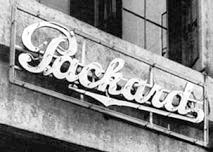
  • In 1923, Georges Claude and his French company Claude Neon, introduced neon gas signs to the United States, by selling two to a Packard car dealership in Los Angeles. Earle C. Anthony purchased the two signs reading "Packard" for $24,000.
    Neon lighting quickly became a popular fixture in outdoor advertising. Visible even in daylight, people would stop and stare at the first neon signs dubbed "liquid fire."

January 25, 2010

How does neon work?


Neon, a rare colorless, odorless gas, is found not only in our atmosphere, but also in gases trapped in the earth.
Since neon is a first-rate conductor of electricity and since it has an amazing ability to give off light which can be seen at great distances, it is used most frequently in airplane beacons, in lamps, and in advertising signs.
Neon lamps are made by removing all the air from glass tubes and filling them with neon. An electrical current is sent from an electrode at one end of the tube, through the neon, to a second electrode. This electrical current causes the gas to glow a fiery red. Neon lamps do not have filaments as are found in incandescent lamps, in neon lamps it is the gas itself that glows.
Neon is produced when air is turned to a liquid under high pressure and at temperatures of about -200°C. That liquid leaves behind it a gas, neon. Even though neon is costly to produce, very little is needed to create that bright light. Only one quart of neon gas will light up 200 to 300 feet of glass tubing.
Pilots have reported seeing some neon beacons at a distance of 20 miles, when no other light was visible!

History of Neon

Neon signs were once the calling card of virtually every diner and motel that popped up along the twists and turns of America's most famous roads. With a look that at the same time was both alluring and gaudy, this modern day version of the roadside sign reached it's peak during the heydays of the 50's and early 60's.


The word neon was coined from the Greek "neos", which means new gas.


But what about it's grand beginning? You can blame its start on the renown scientist Nikola Tesla, who unveiled his neon lamp sign at the 1893 World Fair in Chicago. Tesla's lamp borrowed elements of German physicists' Heinrich Geissler's famous electrical tubes.


Building upon the shoulder of this genius, the French chemist Georges Claude then developed the "neon sign." Claude achieved this by passing a small electric current through an inert gas to produce a light within a glass tube.


Claude also discovered that the tubes that held the gaseous mixture could easily be twisted and shaped to make the letters and pictures we are all accustomed to. George Claude unveiled this modern day innovation in lighting at the 1910 Paris Expo.   Viva le neon!

January 24, 2010

Signs, they're everywhere. . .

The definition of a sign:


A method of display that is used to identify, advertise or communicate a place of business, a product, a command, a warning, a direction or history.

Why bother spending $$$ on a sign?

An effective on-premise sign is the number one form of advertising for many retail establishments, and during tough economic times, when marketing dollars are scarce, the sign plays an even more critical role in promoting a company’s product or services.


Data from the U.S. Small Business Administration shows that signage is the least expensive, yet most effective form of advertising available to retailers, and is responsible for half of retailers' customers --- that's right 50 percent.


Businesses can't afford to just 'hang up a shingle' if they want to stay competitive in today's marketplace.


Unlike other types of advertising, your sign works for you 24 hours a day, 7 days a week, 365 days a year, creating the first impression of your business, telling people who you are, where you are and what you offer.